Cypher 2025: A Year in Review
A look back at what we built, who joined us, and where we're headed.
CAMBRIDGE, MA · December 17, 2025
A year ago, Cypher was still an idea. Now we have users, partners, and a platform that people rely on for their research. Here's a summary of what happened in 2025.
Q1 (February–March): Getting the Basics Right
February: Protocols AI
First up: the Protocols tool. Scientists spend a lot of time building protocols. And even longer modifying protocols for their needs. We saw this as an excellent opportunity for AI. Large language models can quickly digest documentation, or understand how to scale a protocol. Allowing scientists to spend more time refining the design of an experiment. We then brought in timers, executable widgets, and materials/equipment lists. We are hoping that the protocols tool is an excellent resource for scientists going forward.
March: Analysis Tool
Then came Analyses. Data analysis can be a major bottleneck for researchers. There are many softwares and even AI agents in this space. But we thought the use of AI to write a Python script was the perfect way for scientists to be able to use AI with confidence. Further, this opens the Python ecosystem to scientists who never had access before.
Q2 (April–June): Going Live
April: Launch Day
April 16th was our public launch. We had been working with early users for a few months, but this was the moment we opened the doors to everyone. (Read the full announcement on MassBio)
We also officially launched Widgets. The idea behind Widgets is that once you create a useful script with the AI, you should be able to save it and share it with your team. They can run it without needing to understand the code — just fill in the parameters and go. We think this could help standardize a lot of processes and reduce rework across an organization.
Some early feedback from our users:
"What would take me half a day to generate five graphs is now taking me under 45 minutes."
— Scott Robinson, MicroQuin
"It's drastically cut down the time I spend tweaking code for small plot changes."
— Rashi Jeeda, MIT
June: AI Settings
We added AI Settings. This lets users customize the system prompts that guide the AI's behavior. If you have specific formatting preferences or want the AI to respond in a certain way, you can adjust it here. (Read more)
Q3 (July–September): Building Out the Platform
July: The Lab Notebook
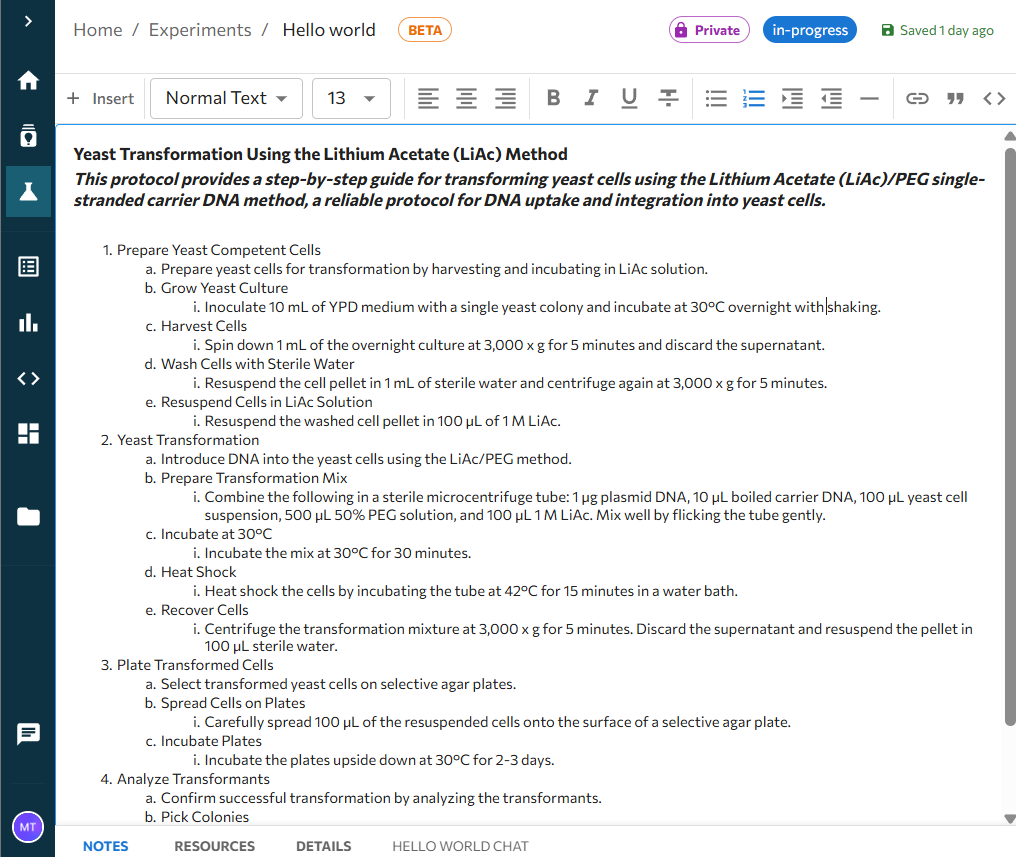
We launched the Experiment Lab Notebook. The goal was to create a place where protocols, data files, notes, and AI assistance all live together. Most ELNs are just storage — you record what happened after the fact. We wanted something that could actively help during the experiment. It's still evolving, but we think the foundation is solid. (Read more)
August: Our First Hire & Instruments
Michael Taylor joined as our first employee. He spent 5.5 years at Ginkgo Bioworks on the high-throughput screening team, so he has firsthand experience with the challenges of lab software. He's also mentored 11 iGEM teams over the years.

Michael built the current version of our Experiments page largely through prompting the AI — using the tools we built to build more tools. It was a good test of whether our approach actually works in practice.
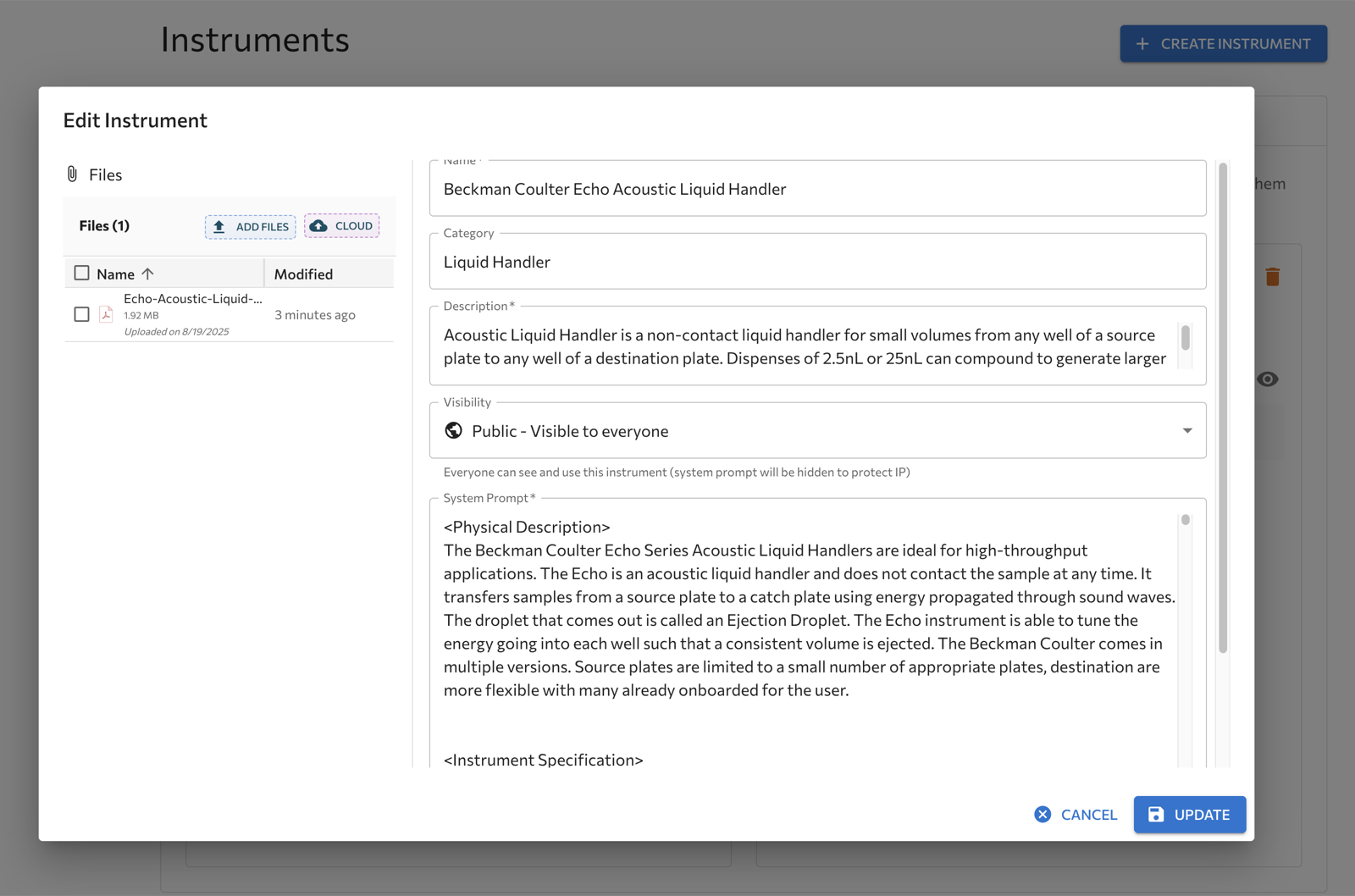
We also started working on instrument integrations. Lab instruments often require specific file formats — CSVs with particular column names, certain value constraints, etc. We built integrations for the Formulatrix Tempest, Beckman Coulter Echo, and DropGenie systems. The AI learns the requirements for each instrument and can generate compliant files directly. (Read more)
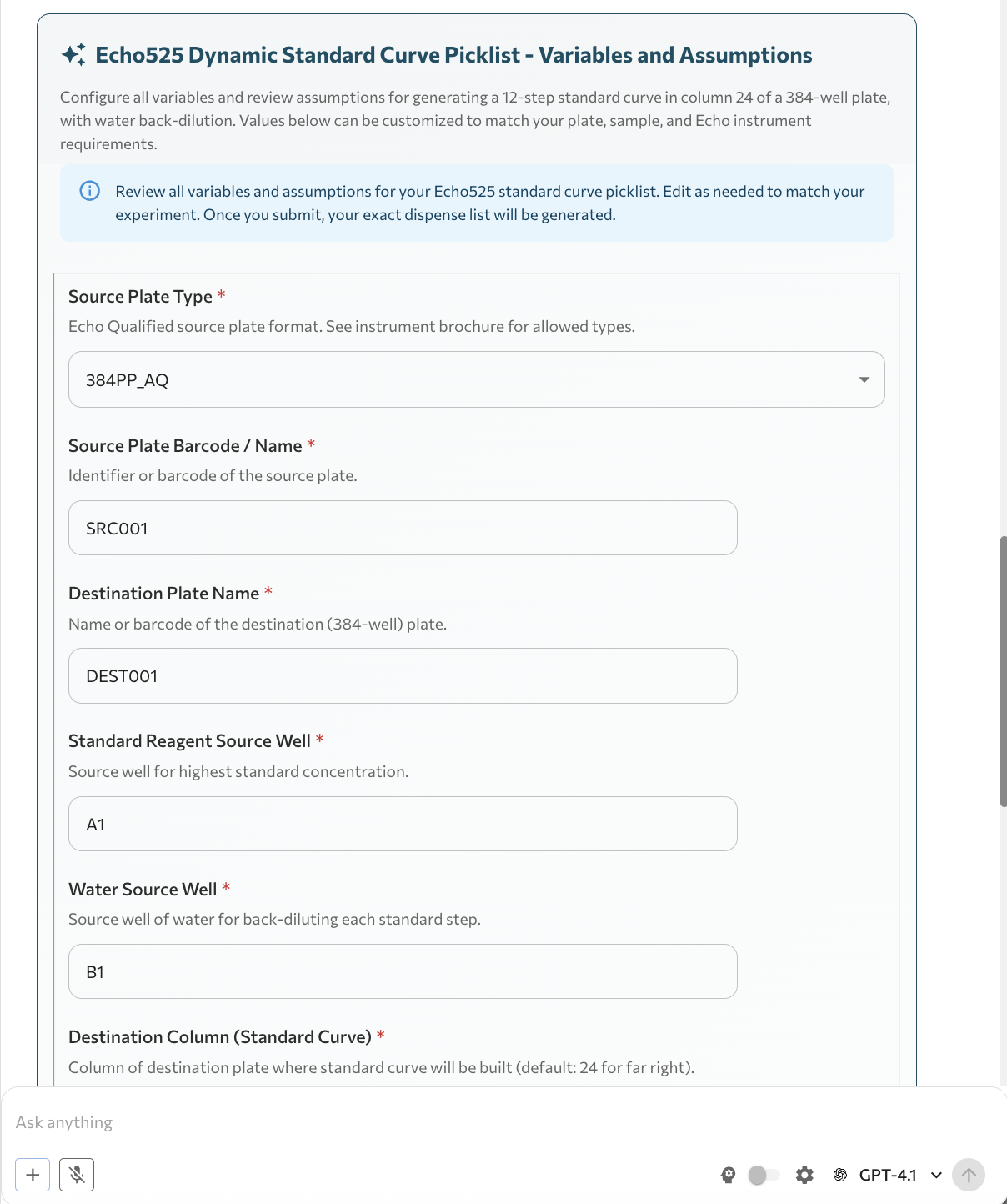
The DropGenie integration was a good example. Users can describe their experiment, fill out a form with the relevant parameters, and get pick lists and plate maps formatted correctly for the instrument.
September: Team Growth & New Offerings
We wrote about some of the ideas we've been developing — dynamic forms (having the AI ask clarifying questions rather than making assumptions) and the concept of vibe coding for labs (describing what you want and letting AI handle the implementation). (Read more)
We also introduced Cypher Solutions — a services offering for teams that need custom software work. Some problems require more than a self-serve platform, and we wanted to be able to help with those too. (Read more)
The team expanded in September. Benjie Chen joined as an advisor — he has a PhD from MIT, co-founded Addgene, and spent 14 years at Ginkgo building their software and foundry systems. (MassBio) Helena Mistry joined as VP of Sales, bringing experience from Unlearn.AI, Imeka, and Eurofins. (MassBio) And Enzidia, an enzyme engineering company, became a design partner to help us understand workflows in that space. (MassBio)
Q4 (October–December): Getting Out There
October: Conferences & Hackathons
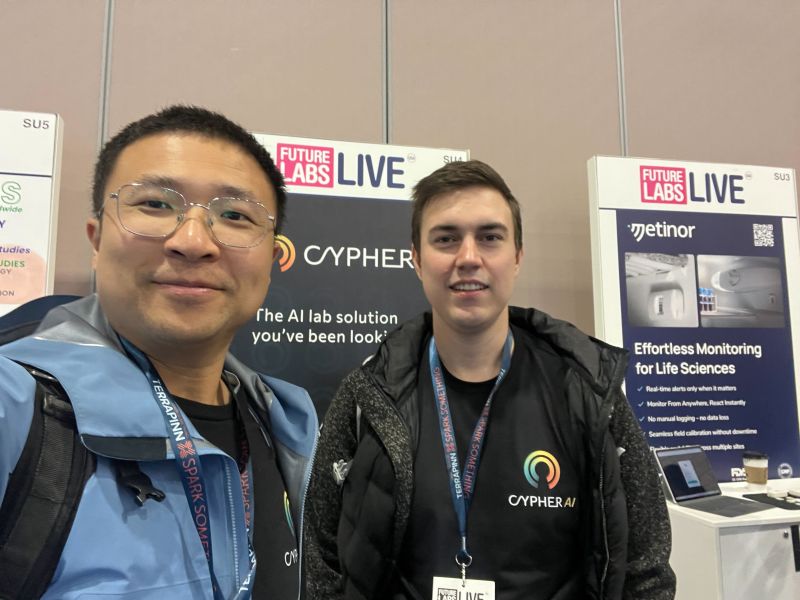
Michael and Yaoyu attended Future Labs Live. It was a good opportunity to meet people working on lab technology and hear about the problems they're trying to solve.
We also co-hosted AI × Bio Hack #4 in San Francisco with Briefly Bio, Potato, and Monomer. The challenge was to optimize cell cultures using robotic systems and AI tools.
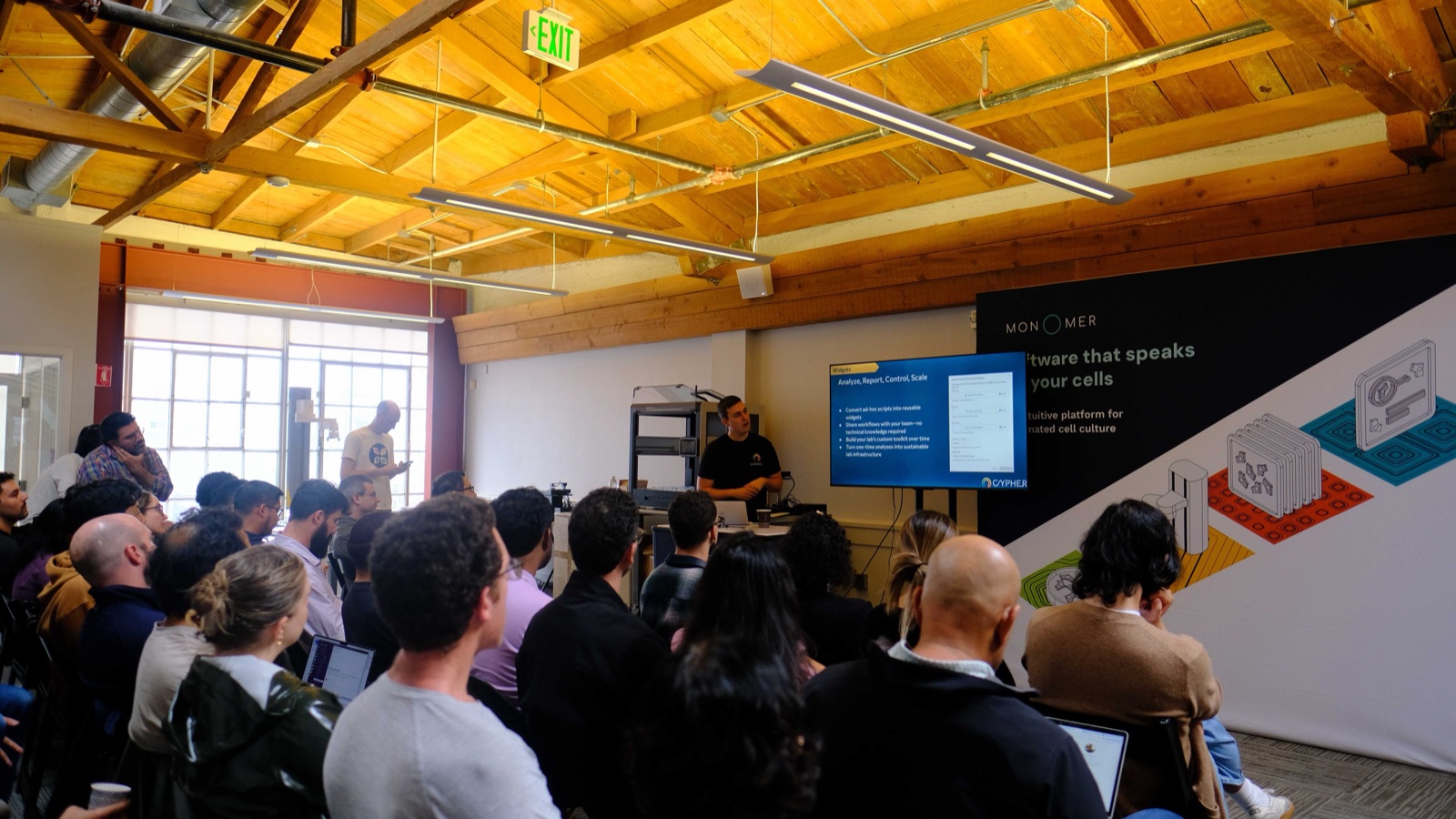
One team built a colony-picking pipeline over the course of the hackathon. They used a Cephla Squid for imaging, wrote image analysis code through Cypher, and coordinated picking with an OpenTrons Flex. It was a good demonstration of what's possible when you connect these pieces together. (Read the full write-up)
December: Partnership & Team Meetup
We announced a partnership with Flock Bio. They specialize in pooled DNA libraries and are now using Cypher for protocol automation, order management, and data pipelines. (Read the full announcement on MassBio)
"This is the platform I've wanted my entire career. The automation, the data pipelines, the order management — it all just works."
— Matthew Youngblut, Flock Bio CSO
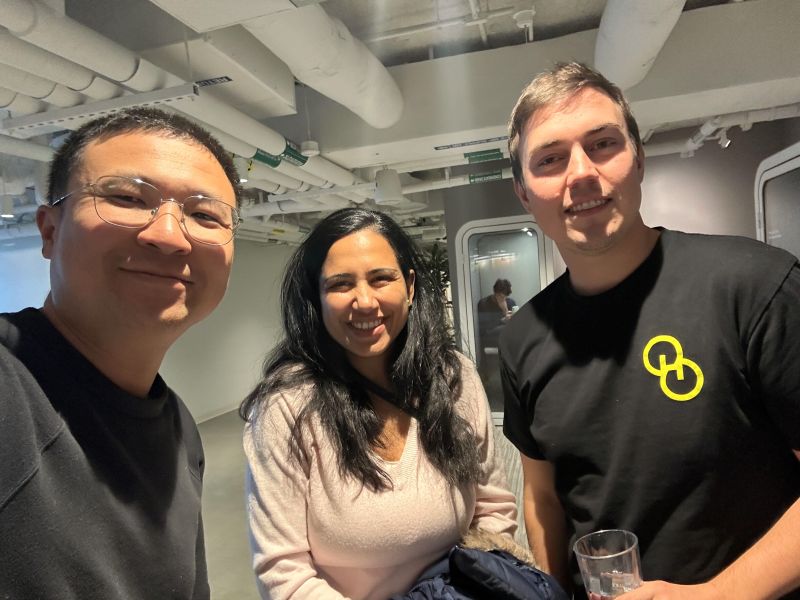
We also had our first in-person team meetup in Boston. It was good to spend time together, plan for the coming year, and just get to know each other better outside of video calls.
Looking Ahead
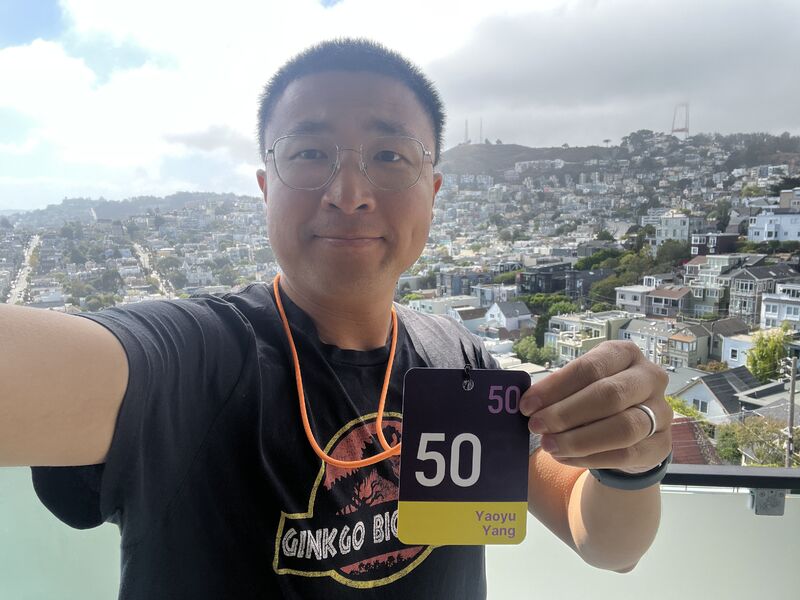
Yaoyu completed the Fifty Years 5050 Cohort in December — a program for founders working on meaningful problems. It was a valuable experience for thinking through the bigger picture of what we're building.
There's still a lot to do. We want to support more instruments, work with more partners, and keep improving the core tools based on what users tell us.
Thank you to everyone who used Cypher this year, gave us feedback, or helped us understand what scientists actually need. We appreciate it.
About Cypher
Cypher is an AI-powered platform built for supercharging scientific research. Designed to streamline protocol creation, data analysis, visualization, and team collaboration, Cypher enables research groups to run better experiments and accelerate discovery. Whether you're in biotech, pharma, or academia, Cypher gives your team the tools to significantly reduce repetitive, low-scientific-value tasks and focus on what matters most to science. Built by scientists for scientists. Learn more at: https://cypherbio.ai