A Closer Look at Automated Colony Picking using Cypher AI Tools
How one team transformed a complex lab task into an automated workflow at the AI Scientist Hackathon.
SAN FRANCISCO, CA · November 14, 2025
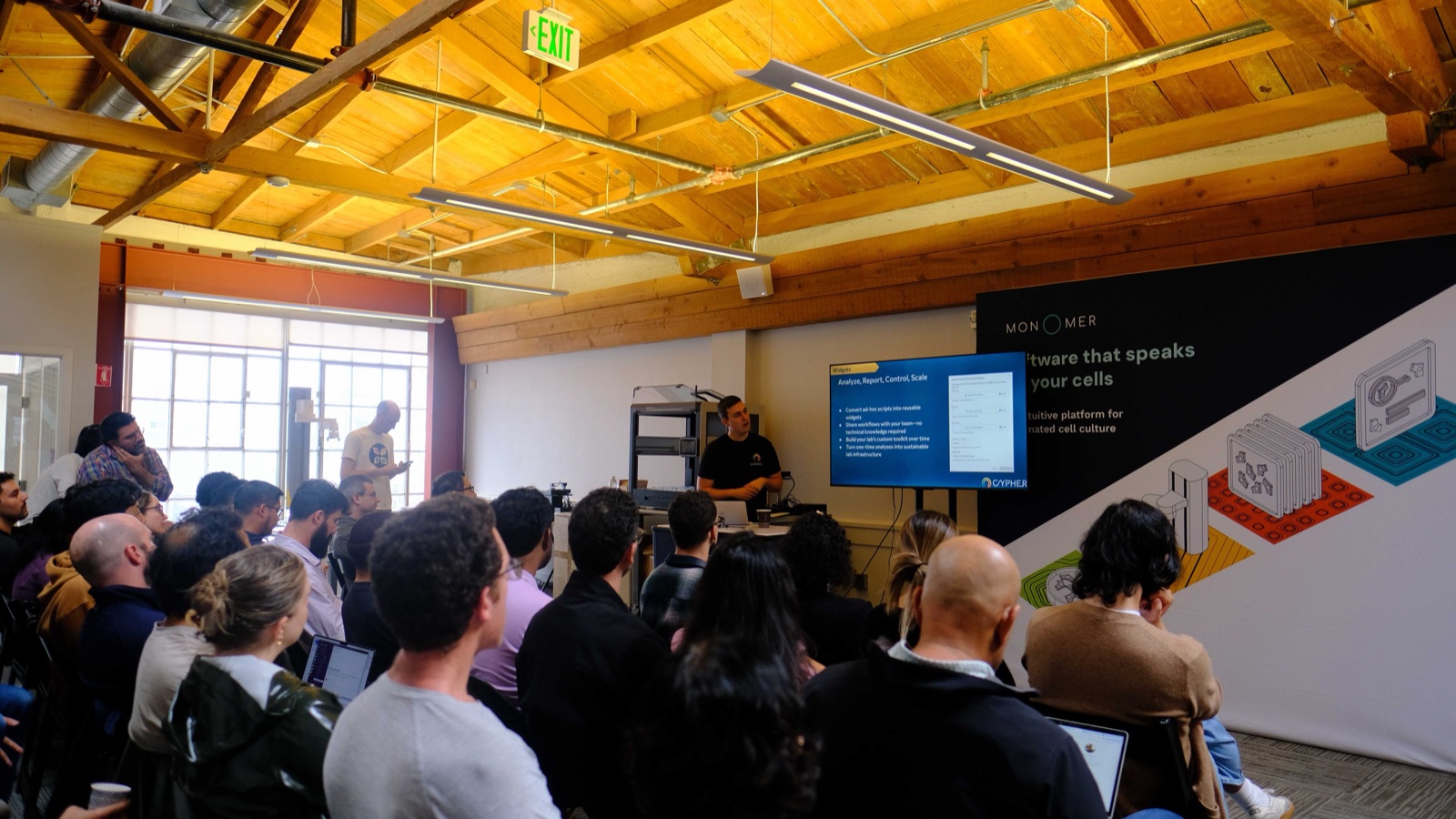
Cypher is proud to have sponsored the AI Scientist Hackathon held in San Francisco during October 2025. There were many incredible examples of how AI can interact with automation hardware and the scientist.
We would like to focus on a group that took on the colony picking challenge and heavily utilized the Cypher platform. In 36 hrs, this team developed an end-to-end solution for colony picking utilizing the equipment they had on hand. This system was built using user-defined instrument integrations and vibe-coded python widgets on Cypher. The full process was run 3 times end-to-end without issue!
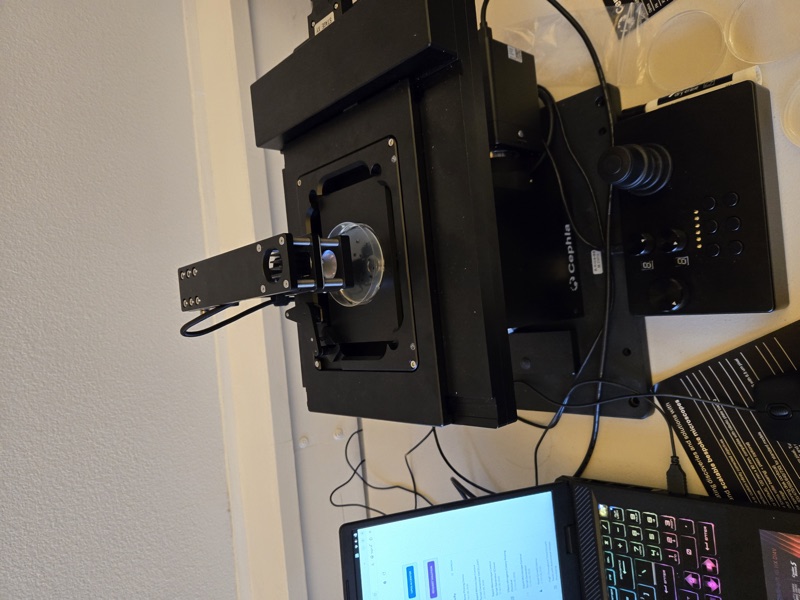
The Cephla Squid was utilized to generate images of agar plates. The Squid is an affordable and open source instrument. It has a GUI but can also take python-scripted instructions. Users fed example python scripts and aspects of the Cephla GitHub to a large language model in order to generate an instrument integration file. This file educated the LLM on how to write python scripts for the Squid.
The instrument integration file was tested against the Cephla Squid for several iterations until the LLM could reliably generate python files that covered the needs of the group.
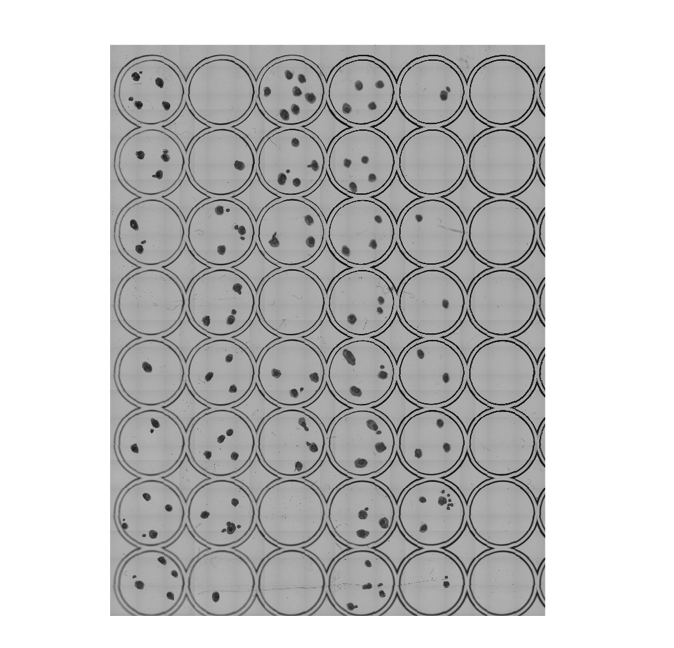
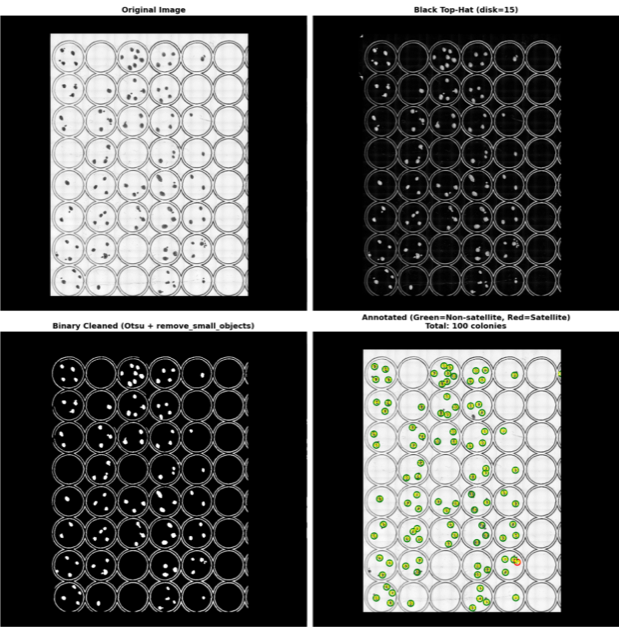
Output Images from the Cephla Squid were processed using a vibe-coded python script (cypherbio.ai/widgets/colony-analysis) that identified colonies and filtered out satellites/artifacts.
This widget was developed over the course of several hours and a total of 48 prompts sent to the Cypher Analyses Chat. The widget is well beyond the capability of the user that developed it, in fact, the user never made a manual edit to the python script.
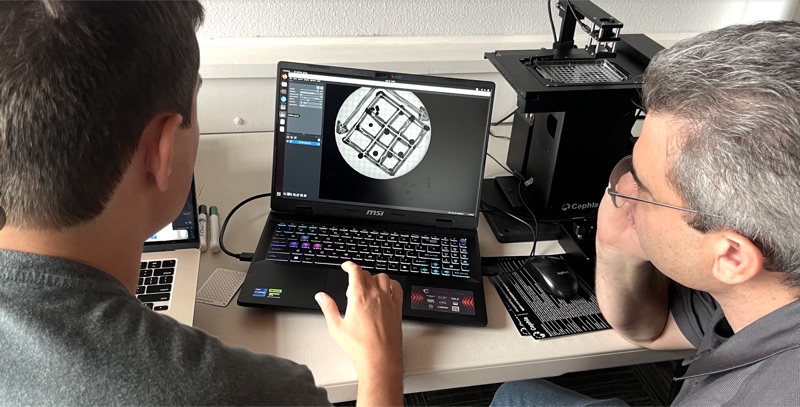
Several key prompting techniques were used:
- The LLM was told to ask questions regularly, the user then provided detailed responses to those questions. LLMs make wild assumptions and will always return something, force it to understand what you are asking!
- Steps are small, incremental, and detailed: feedback was provided after every prompt with specific and actionable examples. Vague language is avoided in favor of specific examples that are provided as the "test" case.
- Images (produced by the python script) were fed back into the Cypher AI for image analysis, the user asked: "what do you think is wrong with this" or "do you see the artifact being called here".
- Exploratory scripts. The user and the Cypher AI do not know what a good definition of a satellite colony is, so design a test (ex: colonies 10 and 80 are satellites & colonies 9 and 45 are not satellites) and then iterate through hundreds of parameter combinations to determine relevant values.
- Document where possible. The LLM is happy to overfit and happy to change every aspect of your code. Have the LLM produce a text file with the script you are developing. This text file explains the decisions that were made and can provide more context than the user ever could.
- LLMs do better when asked to plan. Being forced to explain its reasoning and plan iterative steps/changes dramatically improves LLM performance. This is the equivalent of "thinking ahead".
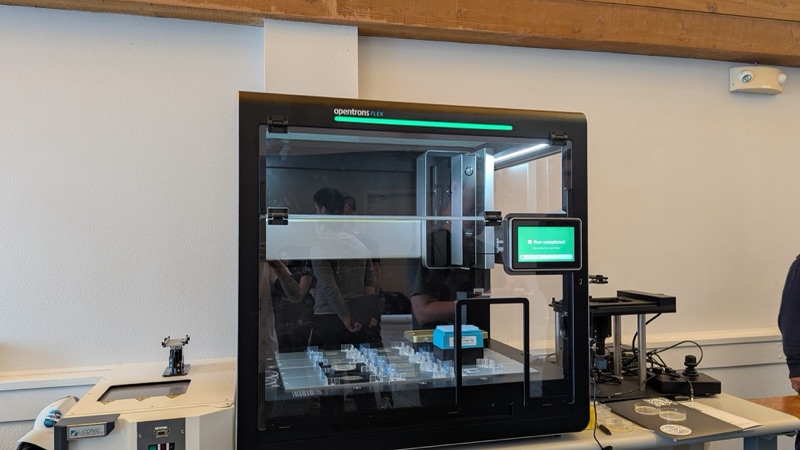
Image processing produced x/y coordinates mapped to the millimeter & based on the relative position to the center of the A1 well. These coordinates were provided as variables into an OpenTrons Flex script.
The OpenTrons Flex was used to perform the final colony picking step. The Flex was controlled via available MCP tools to write python scripts that were then provided to the Flex for execution.
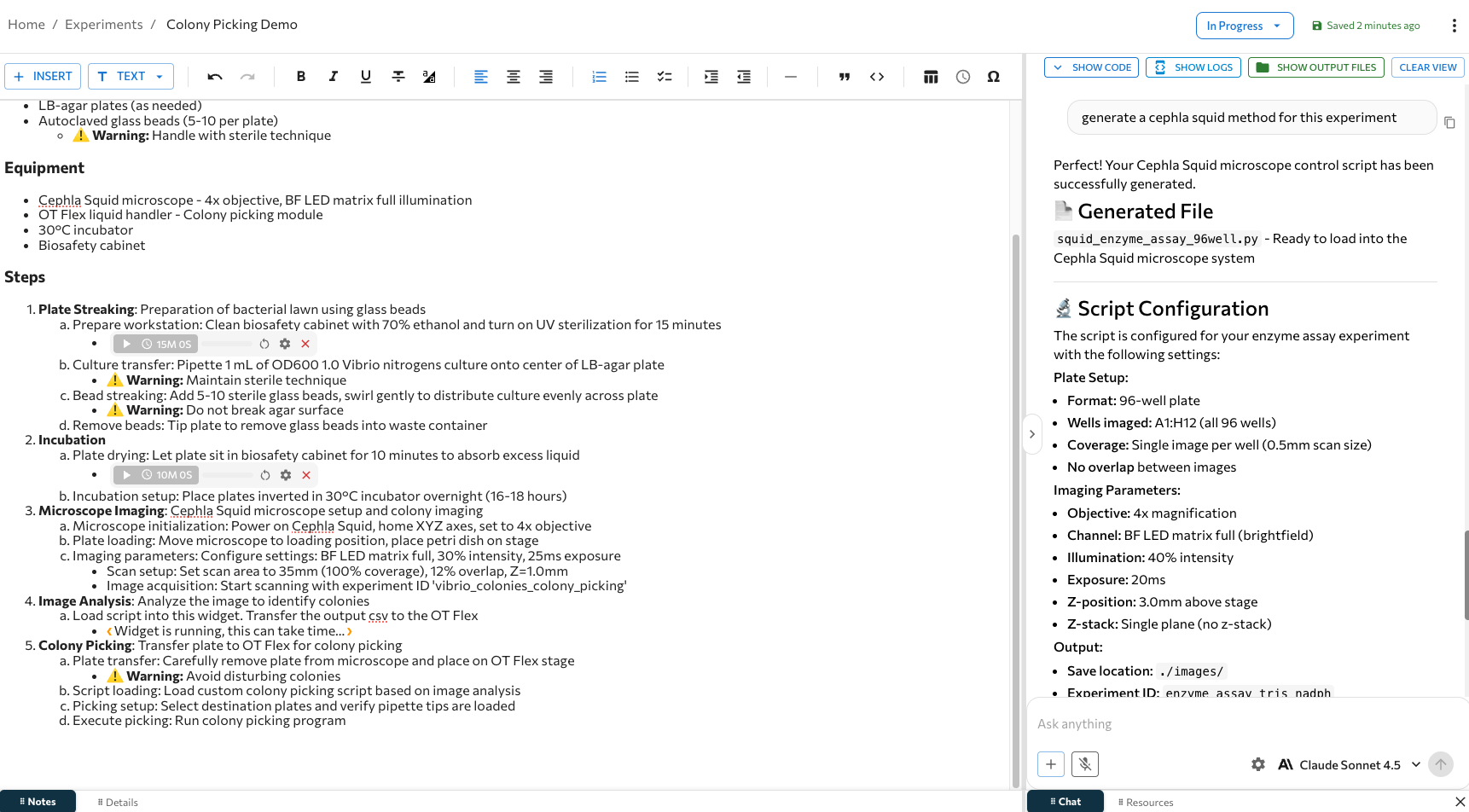
Cypher aims to maintain the flexibility of AI and the repeatability of scripting. Together, these tools provide the scientist with confidence to work quickly while producing high quality work.
Shown above is Cypher ELN product, here the user is interacting with the protocol through running the image analysis widget and interacting with the AI chat to produce a Cephla Squid input file. Below is Cypher protocol runs view, this is intended to be a focused view of the task at hand. You can see the user has run the Colony Analyzer Widget and has asked the AI for a Cephla Squid input file.
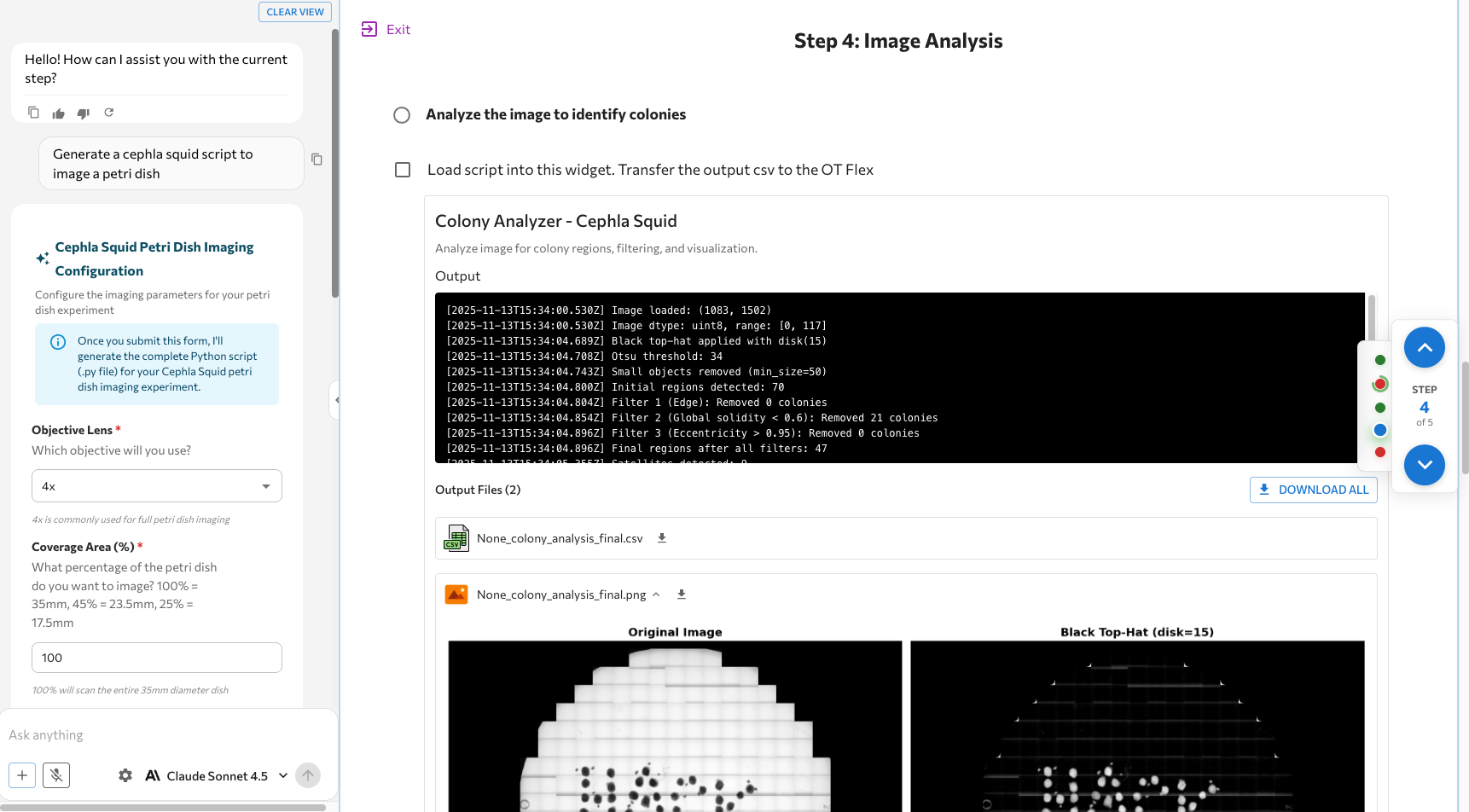
This Cephla Squid → Image Analysis → OpenTrons Flex represents a common process that scientists deal with routinely. Colony picking is rarely moved away from a manual process until sufficient scale is achieved. We believe the barrier to entry is the complexity of automation and software. But this technical burden does not need to be the way! Cypher AI acts as the Scientist-In-The-Loop solution to enable scientists with custom software and automation tools.
About Cypher
Cypher is an AI-powered platform built for supercharging scientific research. Designed to streamline protocol creation, data analysis, visualization, and team collaboration, Cypher enables research groups to run better experiments and accelerate discovery. Whether you're in biotech, pharma, or academia, Cypher gives your team the tools to significantly reduce repetitive, low-scientific-value tasks and focus on what matters most to science. Built by scientists for scientists. Learn more at: https://cypherbio.ai