Dynamic Forms, Vibe Coding, and the Right Level of Detail
This week: Dynamic forms that capture exact information, vibe coding for laboratory workflows, and finding the right granularity for scientific communication.
CAMBRIDGE, MA · September 3, 2025
You Are Going to Love Dynamic Forms!
Most LLMs live in chat interfaces, where you go back and forth until the AI has what it needs. That works for brainstorming, but it is a painful way to handle exact information.
That is why we built dynamic forms into Cypher. Instead of guessing or asking repeatedly, the LLM can present a form that captures the exact details required. It provides constraints for each variable, making the inputs unambiguous: plate type in a dropdown, acceptable drop off locations, number of samples per batch, needed sample details, the list goes on!
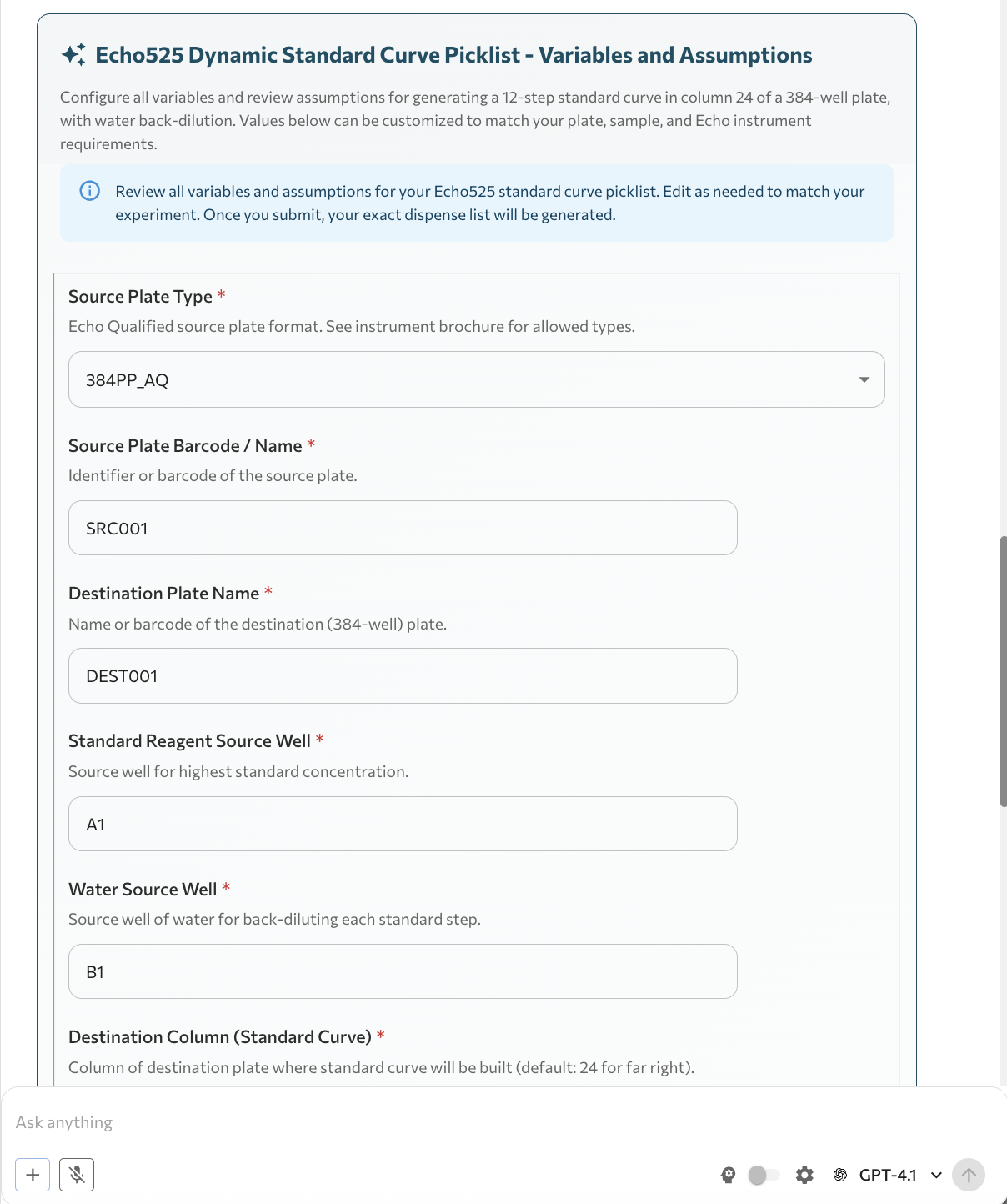
We see this going far beyond single-user workflows. Dynamic forms can act as handoff tools between people and systems. Think about a laboratory core facility intake form, or updating a LIMS with complex metadata. Why should you have to look up the constraints for each field when the accepting group already knows them?
Custom forms for every application does not scale. But dynamic forms generated by an LLM can flex to the situation, organizing the information both sides need to exchange. This is what makes experiments more reproducible and lab coordination less stressful: a shared form, generated on the fly, that captures exactly what matters.
Vibe Coding Laboratory WorkFlows
Lately, I've been building Cypher features through vibe coding. Or, using an AI to make changes to the Cypher codebase by describing the outcomes that I want.
Here's how it works: I open Cursor, explain what I want a feature to do, and describe the behaviors I need. I provide the AI with context — sometimes pointing it to an existing feature as inspiration, other times being clear about where the edits should go or what to be careful of.
The AI generates the changes, and I review them in both the codebase and the Cypher website. The result is surprisingly fast iteration with less stress. The tools for vibe coding are strong and getting better all of the time.
This feels like a glimpse of what the future of laboratory biology can look like. Instead of spending hours piecing together protocols or formatting analysis pipelines, scientists will vibe code experiments. You'll describe your intent, and then the AI will piece together protocols and instrument information into an experiment plan that is coherent, reproducible, and ready for review.
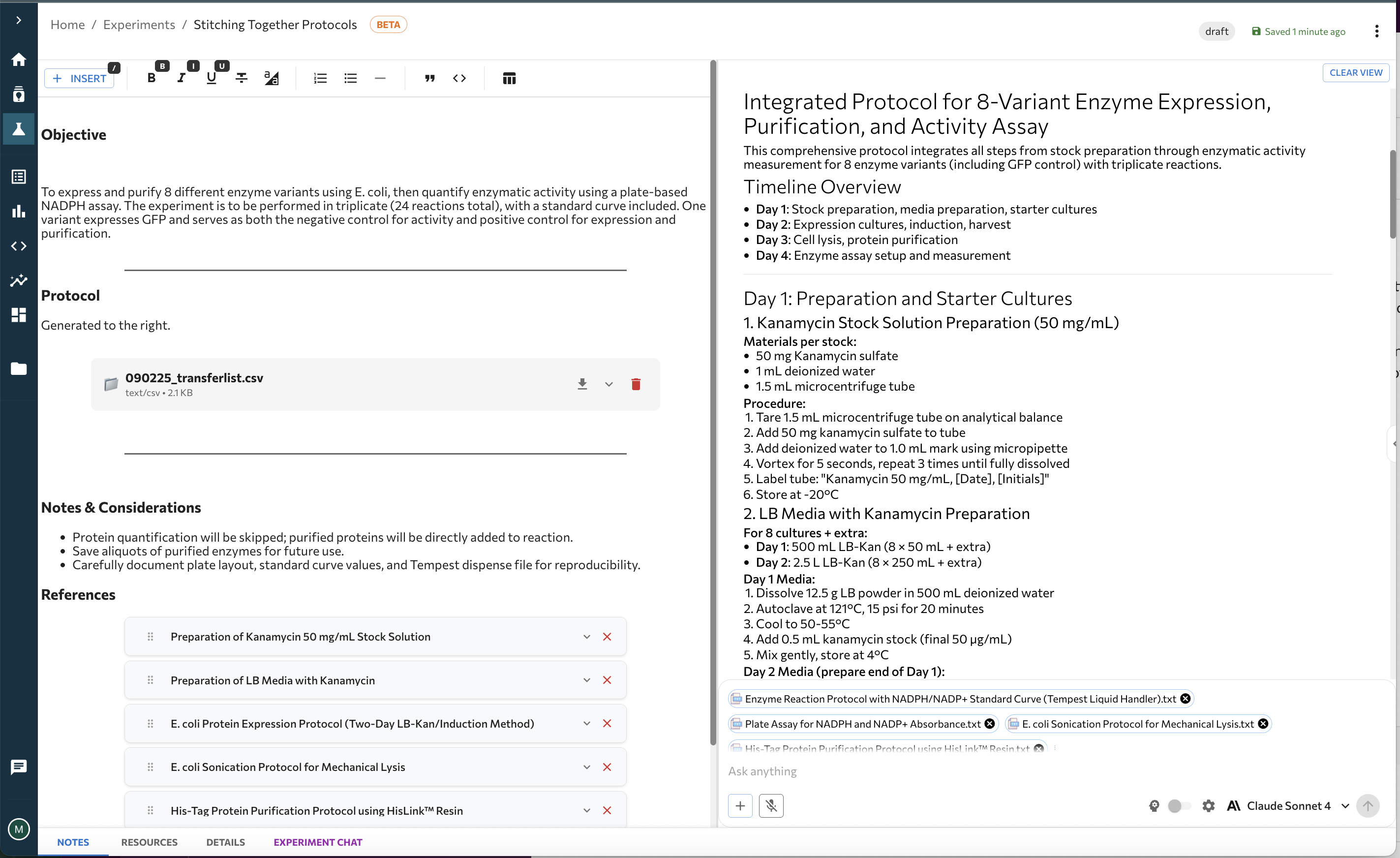
Context will come not just from your words but from past experiments, existing data, known protocols, and the instruments you are comfortable with. Imagine redesigning an experiment and being given a full plan of action in seconds. The new process is scaled appropriately and has instrument settings designed in a csv, ready to go.
Just as vibe coding accelerates software, vibe coding for science will accelerate discovery — faster planning, better documentation, and less mental load.
Granularity: A Communication Challenge
When you make coffee, how much detail do you include in the instructions?
Option one: "Boil the water."
Option two: "In a kettle or pot, boil 100mL of water for every 7g of coffee grounds."
Both are correct. The difference is granularity — how much precision you want in your process.
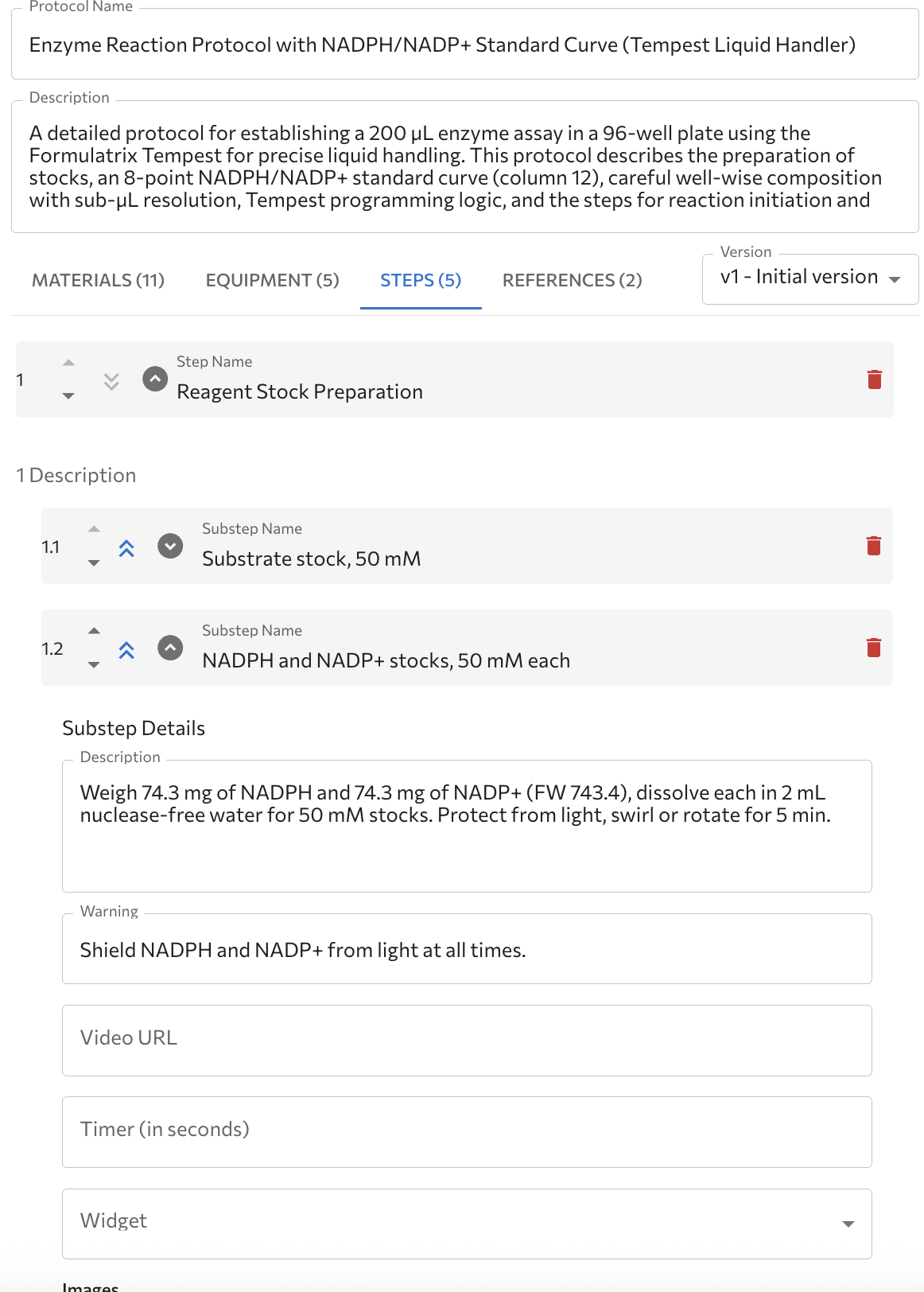
Scientific protocols face the same challenge. One version might say: "Inoculate the culture." Another might say: "Transfer 5µL of overnight culture into 50mL of LB broth in a 250mL baffled flask."
Why not add extra granularity all of the time: the message might get lost, details ignored at the wrong time, or (worst of all) lose time discussing the details when the process was not ready for that level of scrutiny. The right level of granularity depends on the audience. A skilled labmate or high level plan needs a shortened version. A new student, experimental plan, or tech transfer might need several detail spelled out. And an instrument will need much more.
At Cypher, we see AI as a way to bridge these levels. You can describe your intent broadly, and the AI can expand it into detailed steps when ready. Just like making coffee, protocols can be written simple or specific. The value comes from choosing the right granularity for the right audience — and letting AI help adapt it.
About Cypher
Cypher is an AI-powered platform built for supercharging scientific research. Designed to streamline protocol creation, data analysis, visualization, and team collaboration, Cypher enables research groups to run better experiments and accelerate discovery. Whether you're in biotech, pharma, or academia, Cypher gives your team the tools to significantly reduce repetitive, low-scientific-value tasks and focus on what matters most to science. Built by scientists for scientists. Learn more at: https://cypherbio.ai